


- 09 October, 2026
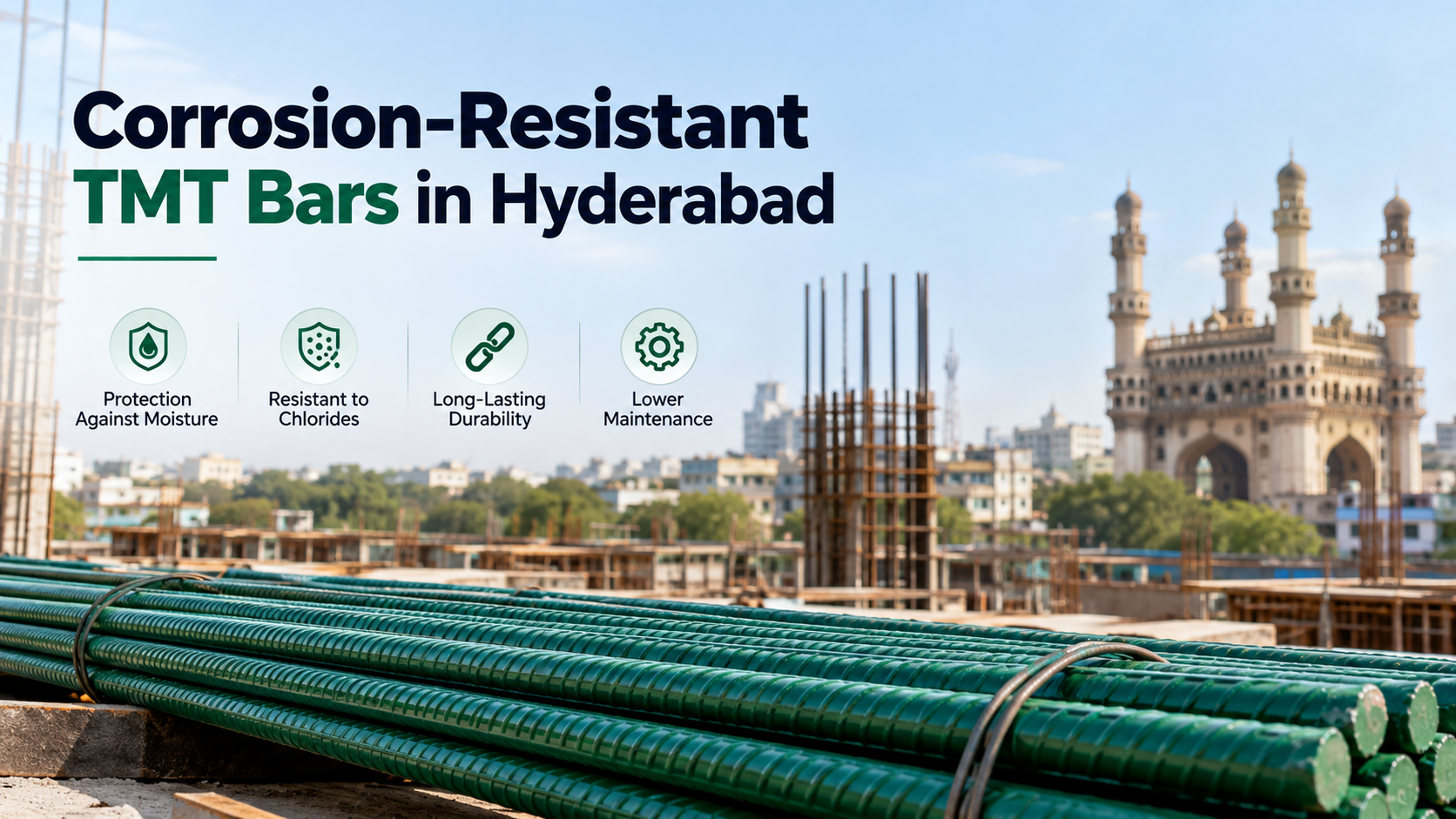
Choosing corrosion-resistant TMT bars in Hyderabad is an important consideration for construction projects exposed to moisture, seasonal rainfall, and other environmental conditions that can contribute to steel corrosion. Reinforcing steel plays a critical role in maintaining the strength and stability of concrete structures. However, prolonged exposure to moisture and corrosive substances can affect the durability of reinforcement over time.
Epoxy-coated TMT bars provide an additional layer of protection by reducing direct contact between the steel surface and corrosive elements. This makes them a suitable option for residential buildings, commercial projects, industrial facilities, and infrastructure where corrosion protection is a priority.
Nagarjuna Ultra offers fusion-bonded epoxy-coated (FBEC) TMT bars designed to provide enhanced corrosion resistance. With over 30 years of experience in the steel industry, Nagarjuna Ultra supplies reinforcement solutions for construction projects across Southern India. Its epoxy-coated bars feature a protective coating with a stated thickness of 200–300 microns, helping support long-term structural durability.
What Are Corrosion-Resistant TMT Bars?
Corrosion-resistant TMT bars are reinforcing steel bars designed to reduce the risk of corrosion caused by moisture, chlorides, and other environmental factors. They help protect reinforced concrete structures from deterioration that can occur when steel is exposed to corrosive conditions.
Conventional TMT bars depend largely on the surrounding concrete for protection. However, when moisture and harmful substances penetrate the concrete through cracks, pores, or other pathways, corrosion can begin.
Epoxy-coated TMT bars provide an additional protective barrier over the steel surface. Fusion-bonded epoxy coating helps limit direct contact between the reinforcement and corrosive substances, reducing the likelihood of corrosion when the coating remains intact and the reinforcement is installed correctly.
Corrosion-resistant reinforcement is particularly useful for structures exposed to repeated wetting and drying, industrial environments, water-retaining facilities, and other demanding service conditions.
Why Corrosion Resistance Matters for TMT Bars
Reinforcing steel provides tensile strength to concrete structures, helping them withstand different loads and stresses. When reinforcement begins to corrode, rust formation can lead to expansion around the steel surface. This expansion creates internal pressure that may cause cracking, spalling, and deterioration of the surrounding concrete.
Over time, corrosion can reduce the effective cross-sectional area of steel reinforcement and affect structural performance.
Several conditions can increase the risk of reinforcement corrosion:
- Moisture exposure: Repeated contact with water can contribute to corrosion when moisture reaches the reinforcing steel.
- Chloride exposure: Chlorides from contaminated materials, groundwater, or other sources can accelerate corrosion under suitable conditions.
- Industrial environments: Certain chemicals and pollutants can create aggressive exposure conditions for reinforced concrete.
- Wet and dry cycles: Repeated changes in moisture conditions may increase the movement of corrosive substances through concrete.
- Poor construction practices: Inadequate concrete cover, cracks, poor compaction, and improper curing can increase the risk of corrosion.
In Hyderabad, seasonal rainfall, moisture exposure, and site-specific environmental conditions make corrosion protection an important consideration for certain construction projects.
Selecting suitable reinforcement, maintaining adequate concrete cover, and following proper construction practices can help improve the long-term durability of reinforced concrete structures.
Benefits of Corrosion-Resistant TMT Bars
Corrosion-resistant TMT bars offer several advantages for construction projects where reinforcement durability is an important requirement.
1. Enhanced Protection Against Moisture
Epoxy-coated TMT bars have a protective layer that reduces direct contact between the steel surface and moisture. This additional barrier helps lower the risk of corrosion in environments where water exposure is a concern.
2. Improved Resistance to Chloride Exposure
Chlorides can accelerate steel corrosion when they reach the reinforcement. Epoxy coating helps reduce chloride contact with the steel surface, making these bars useful for projects exposed to chloride-containing environments.
3. Long-Term Structural Durability
By reducing corrosion-related deterioration, epoxy-coated reinforcement can contribute to the long-term performance of reinforced concrete structures.
Actual durability depends on factors such as coating quality, structural design, concrete properties, installation practices, and environmental exposure.
4. Potentially Lower Maintenance Costs
Corrosion-related damage may require repairs, rehabilitation, or replacement of affected structural components.
Using suitable corrosion-resistant reinforcement can help reduce the likelihood of such damage and may lower maintenance expenses over the structure's service life.
5. Additional Protection for Demanding Environments
Epoxy-coated TMT bars can provide an additional level of protection for structures exposed to moisture, industrial conditions, and other environments where corrosion is a concern.
They are especially valuable when corrosion protection is included as part of a comprehensive structural durability strategy.
How to Choose Corrosion-Resistant TMT Bars in Hyderabad
Selecting suitable corrosion-resistant TMT bars in Hyderabad requires more than comparing prices. Builders, engineers, and project owners should consider reinforcement specifications, coating quality, site conditions, and manufacturer reliability before making a decision.
1. Verify Relevant Indian Standards
Check whether the reinforcement meets the applicable requirements of IS 1786 for high-strength deformed steel bars and wires used in concrete reinforcement.
For fusion-bonded epoxy-coated reinforcement, review the applicable requirements of IS 13620.
Request relevant product certifications and test documentation to confirm that the reinforcement and coating meet project specifications.
2. Check Epoxy Coating Quality
The effectiveness of epoxy-coated reinforcement depends on the quality and condition of the protective layer.
Important factors to evaluate include:
- Coating thickness and uniformity
- Coating adhesion to the steel surface
- Coating continuity and visible defects
- Resistance to damage during handling
- Appropriate repair procedures for damaged coating areas
Inspecting these characteristics helps ensure that the coating can provide the intended protection.
3. Evaluate Construction Site Conditions
Different projects have different corrosion risks. A residential building in a relatively dry environment may not require the same reinforcement protection as an industrial facility or water-retaining structure.
Consider groundwater conditions, moisture exposure, possible chloride contamination, industrial pollutants, and the expected service life of the structure.
The final reinforcement selection should follow the structural engineer's specifications.
4. Select the Appropriate Steel Grade
TMT bars are available in different strength and ductility grades. The correct grade depends on structural design requirements, loading conditions, and applicable engineering standards.
Strength grade and corrosion resistance are separate characteristics. Epoxy coating provides corrosion protection, while the underlying steel grade determines its specified mechanical properties.
5. Choose an Experienced Manufacturer
Manufacturer experience, quality-control procedures, product testing, and supply reliability are important factors when selecting reinforcement.
Working with an established manufacturer also makes it easier to obtain product specifications and technical information needed for construction planning.
Applications of Corrosion-Resistant TMT Bars in Hyderabad
Corrosion-resistant reinforcement can be used in several types of construction projects, particularly where environmental exposure creates an increased risk of steel corrosion.
Residential Buildings and Apartments
Residential buildings require reinforcement that can perform reliably throughout their intended service life.
Epoxy-coated TMT bars may be considered for foundations, basements, and other structural components where groundwater, persistent dampness, or site-specific conditions create additional corrosion concerns.
Commercial Buildings
Commercial buildings, including offices, shopping complexes, and other large developments, depend on properly designed reinforced concrete structural systems.
Where corrosion exposure is significant, epoxy-coated reinforcement can provide additional protection for selected structural elements.
Industrial Structures
Industrial facilities may experience exposure to chemicals, moisture, or aggressive environmental conditions.
Corrosion-resistant TMT bars can help protect reinforcement in industrial structures when selected according to the specific exposure conditions and engineering requirements.
Bridges and Infrastructure Projects
Bridges, transport structures, and other infrastructure assets often require long service lives and reliable performance under changing environmental conditions.
Epoxy-coated reinforcement may help reduce corrosion risk in components exposed to moisture, chlorides, or repeated wetting and drying.
Water Tanks and Water-Retaining Structures
Water tanks, treatment facilities, and other water-retaining structures require careful attention to waterproofing and reinforcement durability.
Epoxy-coated TMT bars can be considered as part of a broader corrosion protection approach that includes appropriate concrete design, adequate cover, and proper construction practices.
Nagarjuna Ultra Epoxy-Coated TMT Bars: Product Features
Nagarjuna Ultra manufactures TMT reinforcement products, including fusion-bonded epoxy-coated bars developed for applications requiring additional corrosion protection.
Its epoxy-coated reinforcement combines the mechanical properties of the underlying TMT steel with a protective epoxy layer.
According to Nagarjuna Ultra's published product information, its epoxy-coated reinforcement includes the following features:
| Product Feature | Specification |
|---|---|
| Product type | Fusion-bonded epoxy-coated TMT bars |
| Epoxy coating | 200 GSM |
| Stated coating thickness | 200–300 microns |
| Listed steel grades | Fe500D and Fe550D |
| Listed size range | 8 mm–40 mm |
| Primary purpose | Additional corrosion protection for reinforced concrete |
These specifications should be confirmed against the latest manufacturer test sheets and the requirements of the individual project before procurement.
The protective epoxy layer helps reduce exposure of the steel surface to moisture and other corrosive substances. Proper handling, storage, bending, and installation are essential for maintaining coating integrity.
For more information about the product and its protective coating, exploreNagarjuna Ultra's epoxy-coated TMT bars.
Best Practices for Using Epoxy-Coated TMT Bars
Choosing corrosion-resistant reinforcement is only one part of improving structural durability. Proper construction practices are equally important.
Protect the Coating During Handling
Avoid dragging epoxy-coated bars over rough surfaces or using handling methods that could damage the protective coating.
Inspect Bars Before Installation
Check the reinforcement for visible scratches, coating defects, and damaged areas before placing it in the structure.
Where repairs are permitted, use an approved repair material and follow the applicable project specifications.
Maintain Adequate Concrete Cover
Concrete cover helps protect reinforcement from environmental exposure. Follow the structural design and applicable standards for cover requirements.
Follow Approved Bending and Fabrication Procedures
Use suitable equipment and manufacturer-approved procedures when bending or fabricating coated reinforcement.
Ensure Proper Concrete Quality
Good concrete mix design, compaction, curing, and crack control are important for limiting the penetration of moisture and corrosive substances.
Combining these practices with suitable corrosion-resistant reinforcement helps support long-term structural performance.
Why Choose Nagarjuna Ultra Epoxy-Coated TMT Bars?
Nagarjuna Ultra brings more than 30 years of steel industry experience and supplies TMT reinforcement products to construction projects across Southern India.
The company uses an established steel manufacturing process and offers fusion-bonded epoxy-coated TMT bars for projects where additional corrosion protection is required.
Its product range provides builders and engineers with reinforcement options for residential, commercial, industrial, and infrastructure applications.
Key reasons to consider Nagarjuna Ultra include its industry experience, epoxy-coated reinforcement options, published product specifications, and dealer network.
For builders evaluatingepoxy-coated TMT bar manufacturers in Hyderabad, Nagarjuna Ultra provides product information to support reinforcement selection and project planning.
Conclusion
Selecting the right corrosion-resistant TMT bars in Hyderabad is an important step toward improving the durability of reinforced concrete structures exposed to challenging environmental conditions.
Epoxy-coated TMT bars provide an additional protective barrier against moisture and corrosive substances, helping reduce corrosion-related deterioration when combined with appropriate structural design and construction practices.
Nagarjuna Ultra offers fusion-bonded epoxy-coated TMT bars for projects requiring enhanced reinforcement protection. Its experience in steel manufacturing and established product range make it an option for builders, contractors, and engineers evaluating corrosion-resistant reinforcement.
To learn more about product specifications, availability, and suitable reinforcement options for your construction project,contact Nagarjuna Ultra.