


- 12 December, 2025
Whenever there’s a small earthquake, most people do the same thing. We look at the ceiling fan first. If it trembles, the subsequent thought that arises is, “Is my residence sufficiently sturdy to withstand this?” I’ve seen this in my own home. Even a mild tremor can make anyone uneasy, especially if you live in a flat or a slightly old building.
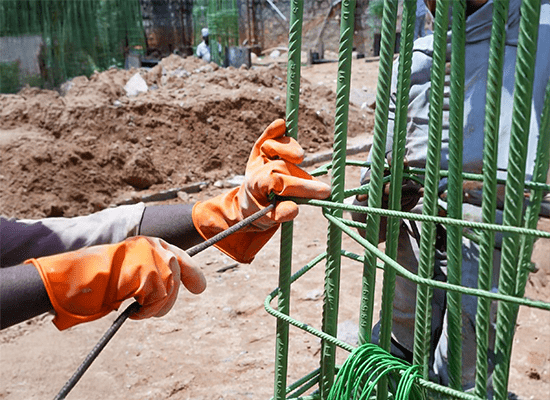
We don’t usually contemplate what’s inside the walls—after all, nobody sees it. But the truth is, the real strength of any house comes from materials that are not visible: the steel rods, the TMT bars, and the frame hidden behind the concrete. Paint, tiles, or wall color adds beauty, but strength comes from the bars holding everything together.
Now, many people ask how TMT bars improve earthquake resistance and whether they actually make a difference. From what I’ve learned, yes, it does. In fact, it makes a bigger difference than people imagine.
Allow me to explain the subject in a simple, grounded way.
Why Earthquake Safety Feels More Important Today
We hear about tremors more often now. Maybe it’s because cities are growing, more structures exist, or we have better reporting. Once, a small 3-point-something earthquake happened early. The bed shook, and everybody in the building came out without even wearing slippers.
The shaking itself doesn’t break buildings.
How the building is made decides everything.
Old buildings, especially ones made with basic steel, crack quickly. Newer structures do much better because they use TMT bars that bend, stretch, and handle pressure instead of breaking.
What Happens Inside a Building During a Quake?
Think of holding a metal spoon and shaking your hand. The spoon moves with you. Now, think of grabbing a dry twig. Shake it fast, and it snaps. Buildings behave in the same way.
During an earthquake, floors don’t move together. A floor moves to the left, another slightly to the right, and the walls absorb the impact. Concrete alone cannot manage this. It’s too harsh and stiff. It breaks the moment pressure increases from the sides.
This is where the steel inside comes into action.
TMT bars act like a flexible backbone. They allow the building to sway slightly without falling apart. The more flexible they are, the more safety they offer. This flexibility, called ductility, is the reason TMT bars improve earthquake resistance as much as they do.
Why Do TMT Bars Work Better Than Ordinary Steel?
If you have ever bent a normal steel rod, you must have seen a faint line at the bend. That’s a sign of weakness. Bend it more, and it breaks.
TMT bars don’t behave like that because they’re made through a special heating and cooling method. The outside is hard and strong, but the inside is softer. This combination is perfect during an earthquake.
The strong outer layer holds the load.
The softer inner core bends instead of cracking.
Thus, the building stays safe even when the ground below moves suddenly.
Think of a coconut. A coconut has a rigid outer shell and a soft inner core, which allows it to withstand a strong impact better than a completely solid object.
Qualities in TMT Bars That Matter in Earthquakes
Here’s what really helps:
- They bend without breaking. That’s ductility.
- They don’t lose shape easily. This is important during repeated shaking.
- They grip concrete well. The ribs on the bar lock in tight.
- They absorb sudden force. This reduces cracks in beams and slabs.
All these things happen naturally when TMT bars improve earthquake resistance as part of the building’s frame.
Why Epoxy-Coated TMT Bars Add a Big Advantage?
Even the strongest steel becomes weak when rust starts eating it. And rust is something you don’t notice until it’s too late. Once corrosion begins, steel loses strength quietly.
Epoxy coating works like a raincoat for the steel.
It keeps moisture away and prevents rust from forming. This feature is crucial in places where the soil stays damp or water touches the foundation often.
During an earthquake, a rusted bar is almost useless.
But an epoxy-coated TMT bar remains strong and dependable. That small difference can decide whether your house gets cracks or stays stable.
This technique is another major way TMT bars improve earthquake resistance in the long run.
Real Incidents That Show the Difference
A civil engineer from a hill town told a story. Two houses close to each other faced the same earthquake. One had normal steel bars, and the other had good-quality TMT bars. After the quake, the first house developed deep cracks in multiple columns. The second one had cracks only in the plaster. The structure stayed intact.
There are similar cases in coastal areas, where buildings with epoxy-coated bars remain strong even after years of salty winds and humidity.
These examples show how silent and powerful a good TMT bar can be.
How can anyone choose the right TMT bars?
Even if you don’t know engineering, you can still pick the right steel:
- Look for ductile grades like Fe 500D or Fe 550D.
- Check how smoothly the bar bends
- Make sure the bar has proper ribs.
- If your area has high moisture, prefer using epoxy-coated bars.
- Only buy from manufacturers known for consistency
- Don’t mix different steel qualities in one building.
Small decisions make a big difference years later.
Why Do Many Builders Trust Nagarjuna Ultra Epoxy TMT?
Nagarjuna Ultra has built a reputation over three decades. People choose them because they provide stable quality, not hit-or-miss batches. Their TMT bars are known for excellent flexibility and strong bonding with concrete, and the epoxy layer protects the steel for years.
Builders in South India rely on it because they have seen how well the bars perform in different types of soil and weather. This long-term trust is difficult to earn in the construction world.
And all these qualities together help TMT bars improve earthquake resistance in real homes and big projects.
Final Thoughts
Earthquakes may not come often, but when they do, they test every inch of your home. The paint, tiles, or fancy interiors don’t matter on that day. Only the steel inside your walls stands between safety and danger.
A good TMT bar bends, absorbs shock, and keeps the structure standing. That is the real strength of a modern home. And that’s why choosing the right TMT bar is one of the most important decisions during construction.
Related Article: What Are The Benefits of Epoxy-Coated TMT Bars for Dam Construction