


- 09 October, 2026
Bridges are long-term infrastructure assets that must withstand structural loads and environmental exposure. Bridge decks, piers, columns, and foundations rely on reinforcement steel to support structural performance. Corrosion-resistant TMT bars for bridges can be considered as part of a comprehensive durability strategy for structures exposed to moisture, chlorides, and other aggressive environmental conditions.
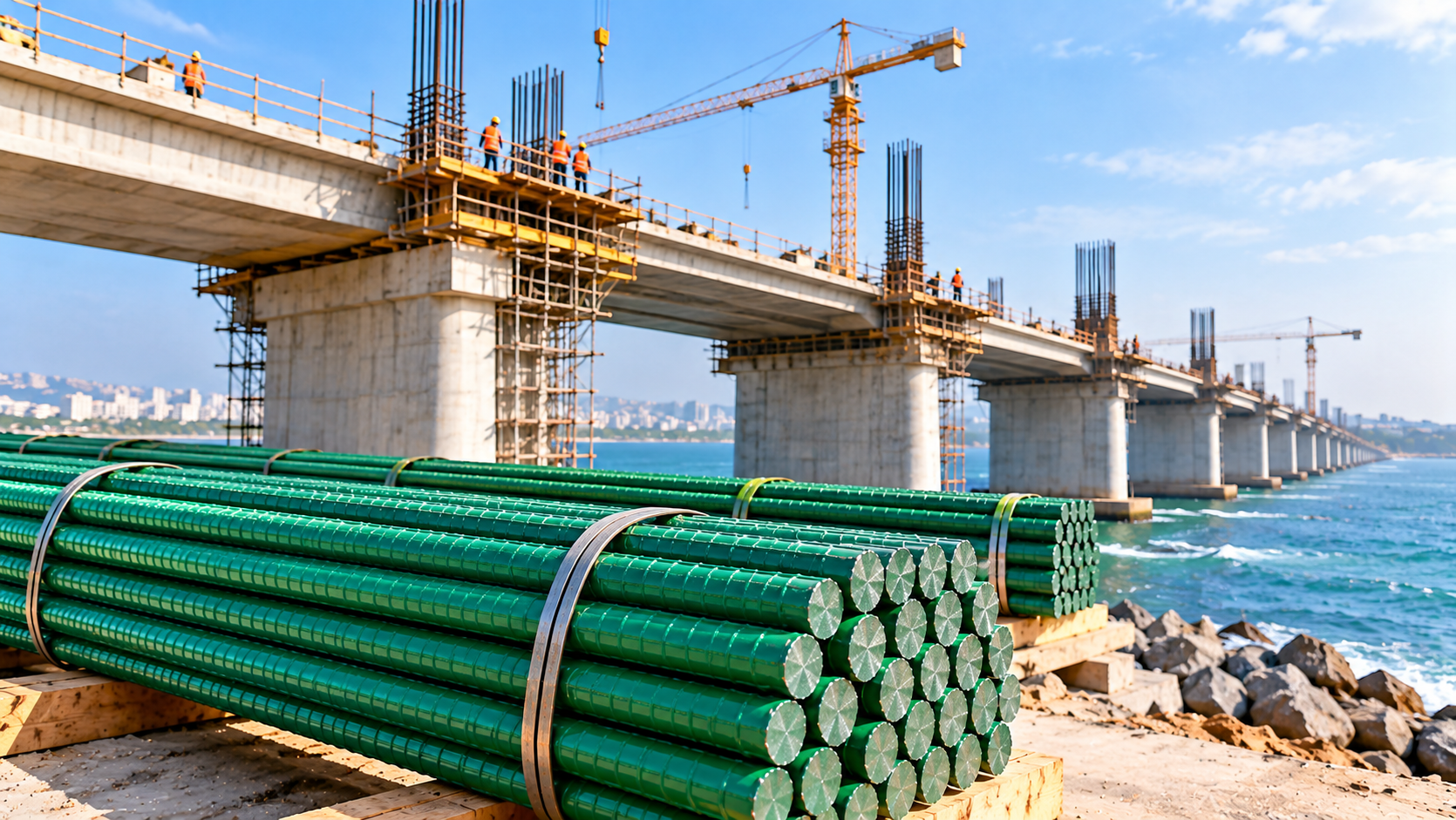
Nagarjuna Ultra Epoxy offers fusion-bonded epoxy-coated (FBEC) TMT reinforcement designed to provide additional corrosion protection. The company's epoxy-coated TMT bars feature a protective layer that helps reduce direct contact between the steel surface and moisture or chloride-containing environments.
How Does Corrosion Affect Bridges?
Bridge reinforcement may experience repeated exposure to rainfall, humidity, standing water, industrial pollutants, and chloride-containing environments, depending on the location and service conditions.
When corrosive substances penetrate concrete and reach the reinforcement, steel corrosion can begin. Rust formation causes expansion around the steel surface, creating internal pressure that may lead to cracking, spalling, and deterioration of the surrounding concrete.
Corrosion can also reduce the effective cross-sectional area of reinforcement over time, potentially affecting structural performance.
Therefore, corrosion protection is an important consideration during the design, construction, and maintenance of bridge infrastructure.
What Are Corrosion-Resistant TMT Bars?
Corrosion-resistant TMT bars are reinforcing steel bars designed to reduce the risk of corrosion in challenging environmental conditions.
One approach involves applying a fusion-bonded epoxy coating over the steel surface. This protective layer acts as a barrier that helps limit direct contact between the reinforcement and moisture, chlorides, or other corrosive substances.
The Bureau of Indian Standards (BIS) specifies requirements for fusion-bonded epoxy-coated reinforcing bars under IS 13620.
The standard covers relevant coating requirements, including surface preparation, coating thickness, continuity, adhesion, and performance characteristics.
Moisture Protection
Bridge components may experience repeated wetting and drying due to rainfall, water exposure, and changing environmental conditions.
Epoxy-coated reinforcement provides an additional barrier that helps reduce moisture contact with the steel surface.
Chloride Protection
Chloride exposure can increase corrosion risks, particularly in marine environments or locations where chloride-containing substances reach the reinforcement.
Epoxy-coated TMT bars help reduce direct exposure of the steel surface to chlorides when the protective coating remains intact.
Long-Term Durability
Bridges are designed to provide reliable service over extended periods.
Selecting suitable corrosion-resistant reinforcement can contribute to structural durability when combined with proper concrete design, adequate cover, and appropriate construction practices.
Reduced Corrosion-Related Maintenance
Reducing reinforcement corrosion can help limit deterioration-related repairs and maintenance interventions.
However, long-term performance depends on environmental exposure, coating quality, structural design, and construction practices.
Applications of Corrosion-Resistant TMT Bars in Bridges
Corrosion-resistant TMT bars may be considered for different bridge components depending on their exposure conditions and engineering requirements.
Bridge Decks
Bridge decks are exposed to rainfall, surface water, and environmental contaminants.
Epoxy-coated reinforcement may provide additional corrosion protection where moisture and chloride penetration are significant concerns.
Piers and Columns
Bridge piers and columns may be exposed to atmospheric humidity, flooding, water splash, or other moisture-related conditions.
Corrosion-resistant reinforcement can be considered for components requiring additional durability protection.
Foundations
Bridge foundations may experience aggressive groundwater, saline soil, or other challenging environmental conditions.
The suitability of epoxy-coated reinforcement should be evaluated according to geotechnical investigations, environmental exposure, and structural design requirements.
Flyovers and Elevated Structures
Urban flyovers and elevated structures are exposed to rainfall, pollution, and changing environmental conditions.
Where additional corrosion protection is necessary, epoxy-coated TMT bars may be incorporated into the reinforcement design.
Coastal Bridges
Coastal bridges may experience chloride exposure from seawater, salt-laden air, and marine environments.
Corrosion-resistant reinforcement can help reduce corrosion risks when used as part of an appropriate structural durability strategy.
Nagarjuna Ultra Epoxy TMT Bars for Infrastructure Projects
Nagarjuna Ultra has more than three decades of experience supplying TMT reinforcement products for construction and infrastructure applications across Southern India.
The company offersfusion-bonded epoxy-coated TMT bars designed to provide additional corrosion protection in environments exposed to moisture and chlorides.
These reinforcement products may be considered for bridge and infrastructure projects where corrosion resistance is included in the material specifications.
Important Technical Considerations
Steel Grade
The reinforcement grade should be selected according to structural design requirements.
IS 1786 specifies requirements for high-strength deformed steel bars and wires used in concrete reinforcement.
Environmental Exposure
Engineers should evaluate exposure conditions such as:
- Chlorides
- Moisture
- Floodwater
- Industrial pollutants
- Saline groundwater
- Marine environments
- Freeze-thaw conditions, where relevant
These conditions influence the selection of reinforcement materials and corrosion-protection measures.
Concrete Quality
Concrete quality plays an important role in protecting embedded reinforcement.
Factors such as concrete cover, permeability, mix design, compaction, and curing can influence the movement of moisture and corrosive substances through concrete.
Coating Integrity
Coating thickness, adhesion, and continuity are important characteristics of epoxy-coated reinforcement.
Proper handling and installation help maintain the protective coating and reduce the risk of damage.
BIS Standards for Reinforcement and Epoxy Coating
The Bureau of Indian Standards specifies IS 1786 for high-strength deformed steel bars and wires used in concrete reinforcement.
IS 13620 covers fusion-bonded epoxy-coated reinforcing bars and includes requirements relating to coating materials, application, inspection, and performance.
Bridge project specifications should clearly identify the applicable standards, testing requirements, and quality-control procedures.
Benefits of Using Corrosion-Resistant TMT Bars for Bridges
Enhanced Corrosion Protection
The epoxy coating provides an additional protective barrier around the reinforcing steel, helping reduce direct exposure to moisture and corrosive substances.
Suitability for Aggressive Environments
Bridge components exposed to moisture, chlorides, and industrial pollutants may require additional corrosion protection.
Epoxy-coated reinforcement can be considered where environmental exposure conditions justify its use.
Why Choose Nagarjuna Ultra Epoxy?
Nagarjuna Ultra has more than 30 years of experience in the steel industry and supplies reinforcement products for construction and infrastructure applications.
The company'sTMT manufacturing process includes melting and refining, continuous casting, rolling, quenching, and self-tempering.
Nagarjuna Ultra also offers epoxy-coated reinforcement designed to provide additional corrosion protection for projects exposed to challenging environmental conditions.
Choosing Corrosion-Resistant TMT Bars for Bridge Projects
Before selecting reinforcement for bridge construction, consider the following:
- Applicable structural standards
- Required steel grade
- Bar diameter and dimensions
- Mechanical properties
- Environmental exposure conditions
- Epoxy coating specifications
- Material test certificates
- Manufacturer quality-control systems
- Handling and installation requirements
- Supply consistency
- Project-specific durability requirements
The final reinforcement selection should follow the structural engineer's specifications and applicable infrastructure design standards.
Conclusion
Reinforcement durability is an important consideration in bridge construction because infrastructure assets are expected to perform reliably over long service periods.
Corrosion-resistant TMT bars for bridges provide an additional protective barrier that helps reduce corrosion risks associated with moisture, chlorides, and other aggressive environmental conditions.
Nagarjuna Ultra's fusion-bonded epoxy-coated TMT bars offer reinforcement options for projects requiring enhanced corrosion protection. When combined with suitable concrete quality, structural design, and construction practices, epoxy-coated reinforcement can contribute to the long-term durability of bridge structures.