


- 15 June, 2026
A builder in Visakhapatnam once said something that perfectly sums up how construction decisions have changed over the years.
"People used to ask me about tiles first. Now they ask me about what goes inside the concrete."
It sounded surprising at first.
After all, reinforcement steel is not something anyone sees once a building is complete. Visitors admire the paint, flooring, lighting, and interiors. Nobody walks into a new home and compliments the steel hidden inside the structure.
Yet that hidden steel carries a responsibility that few other materials do.
Perhaps that is why more homeowners, builders, and developers have started paying attention to it.
Across India, conversations around durability are becoming more common. People want to know how a structure will perform years after construction. They want to avoid expensive repairs. They want materials that can handle changing weather conditions without creating problems later.
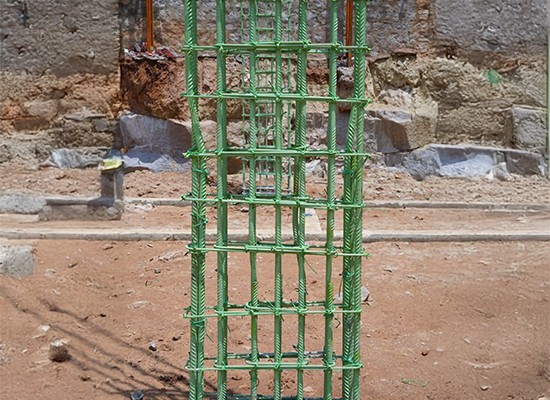
That shift in thinking helps explain the growing interest in epoxy-coated TMT bars.
The demand did not appear overnight. It developed gradually, one project at a time.
When Did Construction Become a Long-Term Conversation?
There was a time when most construction discussions revolved around budgets.
- The focus was simple.
- Finish the project.
- Control expenses.
Move on.
While cost remains important, many homeowners now view construction differently. For them, a house represents more than just another purchase. It is often the result of years of savings, planning, and sacrifice.
Naturally, they want that investment to remain strong for decades.
Builders have noticed this change.
Clients who once accepted material recommendations without question are now doing their research. Some arrive at meetings with notes. Others compare options online before making decisions.
The questions have changed, too.
Instead of asking only about cost, people increasingly want to understand performance.
- How will a structure handle years of rain?
- What happens in areas with high humidity?
- Can certain choices reduce future maintenance?
Those conversations have led to products that focus on durability rather than just immediate affordability.
The Problem Nobody Notices on Day One
Every newly completed building looks impressive.
Fresh paint covers every wall.
The flooring shines.
Everything feels solid.
That is what makes certain construction problems difficult to understand.
They do not appear immediately.
Corrosion is a prime example.
Nobody notices it during a project handover. There is no dramatic warning sign. Often, the process develops quietly over time.
Years pass.
Weather changes.
Moisture finds its way into places people rarely think about.
Eventually, the effects become visible.
By then, resolving the issue can be far more difficult than preventing it.
Ask experienced contractors about older buildings, and many will tell similar stories. They have seen structures that remained strong for decades and others that required attention much earlier than expected.
That experience has encouraged greater interest in corrosion-resistant TMT bars across the industry.
Not because they are new.
This is because builders have seen what happens when durability is ignored.
Why Are Epoxy-Coated TMT Bars Getting Attention?
Occasionally a market changes because of a breakthrough technology.
Occasionally it changes because people become more aware of an existing problem.
The growing popularity of epoxy-coated TMT bars falls closer to the second category.
Builders are not suddenly discovering corrosion. They have always known about it.
What has changed is the level of attention that builders are now giving to long-term performance.
Homeowners are asking more questions. Developers are looking more carefully at lifecycle costs.
Engineers are being asked to justify recommendations in greater detail.
As a result, solutions designed to offer additional protection are receiving more consideration than they did in the past.
The conversation is becoming less about what a material costs on the day it is purchased and more about how it performs over the years that follow.
The Monsoon Teaches a Different Lesson Every Year
Anyone who has lived through an Indian monsoon understands how demanding the season can be. Rain has a way of finding weaknesses.
- A small leak becomes visible.
- A drainage issue suddenly matters.
- Moisture reaches places nobody expected.
- Construction materials face the same reality.
- A building is not tested once.
It is tested repeatedly. Every rainy season adds another chapter to the story.
This phenomenon is one reason builders have become more selective about the building materials they recommend.
Many prefer to think beyond project completion. They know that weather conditions continue influencing a structure long after construction crews leave the site.
Durability, therefore, becomes an ongoing concern rather than a one-time decision.
Why Do Coastal Construction Projects Often Demand More?
Builders who have worked near the coast will tell you that the sea is beautiful from a distance but demanding on a structure. A project overlooking the shoreline may enjoy stunning views, yet it also faces moisture in the air almost every day.
Over the years, that constant exposure can weaken construction materials. This is why builders in coastal regions rarely look at durability as an optional feature. They know that choices made during construction can affect maintenance years later. That practical experience is one reason corrosion-resistant TMT bars have gained attention in many coastal projects.
Builders Are Looking Beyond Project Completion
One interesting change in the industry is how success is measured.
Completing a project on time remains important.
So does staying within budget. But increasingly, builders are paying attention to something else.
How does the structure perform years later?
A project that remains dependable long after handover reflects the decisions made during construction.
That is why many professionals are taking a closer look at epoxy-coated TMT bars and other solutions designed to improve durability.
They understand that a building's reputation takes time to develop. It develops over time.
What Homeowners Are Learning Before Construction Begins?
Information is easier to access today than it was ten years ago.
This has changed how buyers behave.
Homeowners no longer rely entirely on others' recommendations. Many spend weeks researching products before construction begins.
Steel is now part of that research process.
- People compare options.
- They read reviews.
- They ask questions.
Some specifically look into TMT bars for construction because they want to understand what splits one option from another.
The goal is usually the same.
- Reduce uncertainty.
- Make informed decisions.
- Avoid future regrets.
That growing awareness is influencing demand across the construction market.
Building Something That Outlasts Trends
Trends come and go. Construction remains different. A house built today may still be standing fifty years from now.
Few purchasing decisions carry that kind of timeline. That is why durability continues attracting attention. Families are not only thinking about present needs. Many are building for the future.
Some hope their children will live there. Others see the property as a long-term asset.
Either way, the desire for long-lasting structures continues to shape material choices.
People want to be sure that the effort and money they invest today will continue to deliver value for years to come.
Are They Becoming the Best TMT Bars in India?
A steel dealer once joked that the answer to this question changes depending on who is asking. A contractor may look at workability. An engineer may focus on performance. A homeowner typically wants reassurance. That is what makes this discussion so interesting.
A few years ago, most people accepted whatever steel someone recommended to them. Today, many want to know why one option is being chosen over another. Questions about durability, maintenance, and lifespan come up far more often than they used to.
That growing curiosity has naturally pushed epoxy-coated bars into more conversations across construction sites. Whether they are the best choice depends on the project, but people are certainly noticing them.
Conclusion
Talk to someone who has been in construction for twenty years, and they'll tell you the same thing: a building reveals its true quality with time. Not when the paint is fresh. Not when the keys are handed over. Years later.
That's why material choices are getting more attention than before. People are considering more than just construction costs and taking a broader view. In many ways, the growing interest in epoxy-coated TMT bars reflects a simple idea. Build once, and build it well.
FAQs
Related Article: Fusion Bonded Epoxy TMT Bars for Corrosion Resistance