


- 14 January, 2026
Let’s be honest for a moment.
Most people don’t think about steel when they start planning their home. They picture the living room first. Then the kitchen. Then the tiles. Even the curtains get more attention than TMT bars.
And that’s completely normal.
Steel doesn’t show.
But it carries everything you plan to build.
So, when you ask us, “Which TMT bar should I use for residential construction?”, we don’t treat it as a technical question. We treat it as a responsibility. Because your home isn’t a project to us, it’s something that will stay with you for decades.
Let’s talk about it in different ways.
The part of your home that disappears forever
Once the concrete sets, steel goes out of sight.
You won’t see it again, but it continues working silently.
Your TMT bars face more pressure than you imagine — shifting soil, heat cycles, vibration, moisture, and time. Nothing stays the same for twenty or thirty years, except the fact that your steel must keep doing its job.
We’ve seen homes that looked perfect on handover day…
It needed repairs within eight years.
Not because of poor design. Because the steel inside began to rust.
Corrosion doesn’t shout. It whispers. Until one day, the damage shows up on your walls.
That’s why this choice matters so much.
Why is “any TMT bar” not really any TMT bar?
If you compare TMT bars on paper, everything feels similar.
Strength. Grade. Weight. Sizes.
But homes don’t experience life on paper.
Homes face:
- Long monsoon seasons
- Damp soil conditions
- Hard water
- Temperature changes
- Years of micro-vibrations
Regular TMT bars handle strength very well, but corrosion is where most problems begin. Once rust starts inside concrete, the process is slow but unstoppable. It affects the bond between steel and concrete, and that’s when cracks start appearing.
And when you see a crack, it usually means the problem began long before.
Why did epoxy-coated TMT bars change the way homes are built today?
Many engineers shifted to epoxy-coated steel, not because it sounds premium, but because it behaves differently.
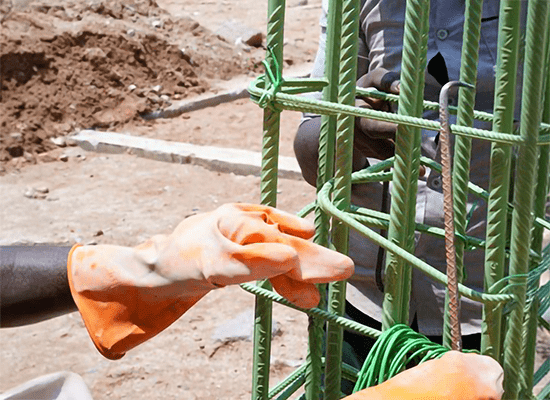
Epoxy coating forms a layer around the steel that blocks moisture and salts — the two biggest reasons for corrosion in India. It’s like giving your steel a raincoat that never gets removed.
For homeowners, this means:
- Slower corrosion
- Better structural stability
- Longer life of the building
- Fewer repair headaches
So, when people ask about TMT bars for residential buildings, epoxy-coated steel naturally enters the conversation, not as a luxury, but as a smart long-term choice.
Because the real question isn’t, “How strong is steel today?”
It says, "How strong will it stay after 15 years?"
What did we focus on when creating Nagarjuna Ultra Epoxy TMT?
When we started developing Nagarjuna Ultra, we didn’t try to make the strongest bar in the brochure. We tried to make the most dependable steel inside real Indian homes.
What mattered to us?
Uniform epoxy coating
The uniform epoxy coating ensured there were no thin patches. There are no weak points in the product.
Corrosion always attacks the weakest area first, so we made sure there wasn’t one.
Bonding performance
Steel doesn’t work alone.
It must bond with concrete in a way that allows the structure to move, breathe, and settle without failing.
Suitability for Indian conditions
- High rainfall?
- High groundwater?
- Are we located near a coastal zone?
We built Ultra TMT to stay stable in these conditions.
Reliability
Steel is not something you experiment with.
Our bars go to homes, schools, and hospitals—places with people, emotions, and memories. That’s why consistency is everything.
So, which TMT bar should you use for your home?
Here is the answer we give homeowners who visit our plants.
Ask yourself a few simple questions:
- Does your area receive heavy rain?
- Do you plan to live in this home for 20–30 years?
- Do you want fewer repairs and cracks down the line?
- Do you want steel that behaves predictably over time?
If your answer is yes to even two of these, corrosion resistance becomes a priority — not a feature.
That’s why epoxy-coated steel is now considered a practical choice for long-term residential construction. Not because it is fancy. Because it is dependable.
Therefore, when someone asks us, “Which TMT bar is best for house construction?”, we say:
- Choose steel that doesn’t give you surprises later.
- Choose steel that protects the investment you’re putting your hopes for.
And if that steel is Nagarjuna Ultra Epoxy TMT, we are proud of that, not because it’s our product, but because it genuinely makes a difference in how long a home stays healthy.
Conclusion
We know you will look at your walls, your flooring, and your windows every day.
You will not look at your steel even once after the day of construction.
That’s precisely why we take our jobs seriously.
Homes are emotional spaces. They grow with you.
The steel inside should support that journey without asking for attention.
That’s what we build at Nagarjuna Ultra Epoxy TMT — strength that stays quiet, protection that lasts, and a foundation you don’t have to worry about.
FAQs
Related Article: Which are the best earthquake-resistant TMT bars in India?